
Part 3: Mind Over Matter
Beginning to navigate a one-sided world...

Look at a small object in front of you. Stare at it intently as though you’re trying to move it with your mind. Keep focusing on it and increase the intensity of your desire to move matter with just a thought. Now, if you’re able to, reach out and lift the object with your hand. There! Mind meets matter. Your mind used your hand to transform your thought into action. Contemplate how amazing that really is…
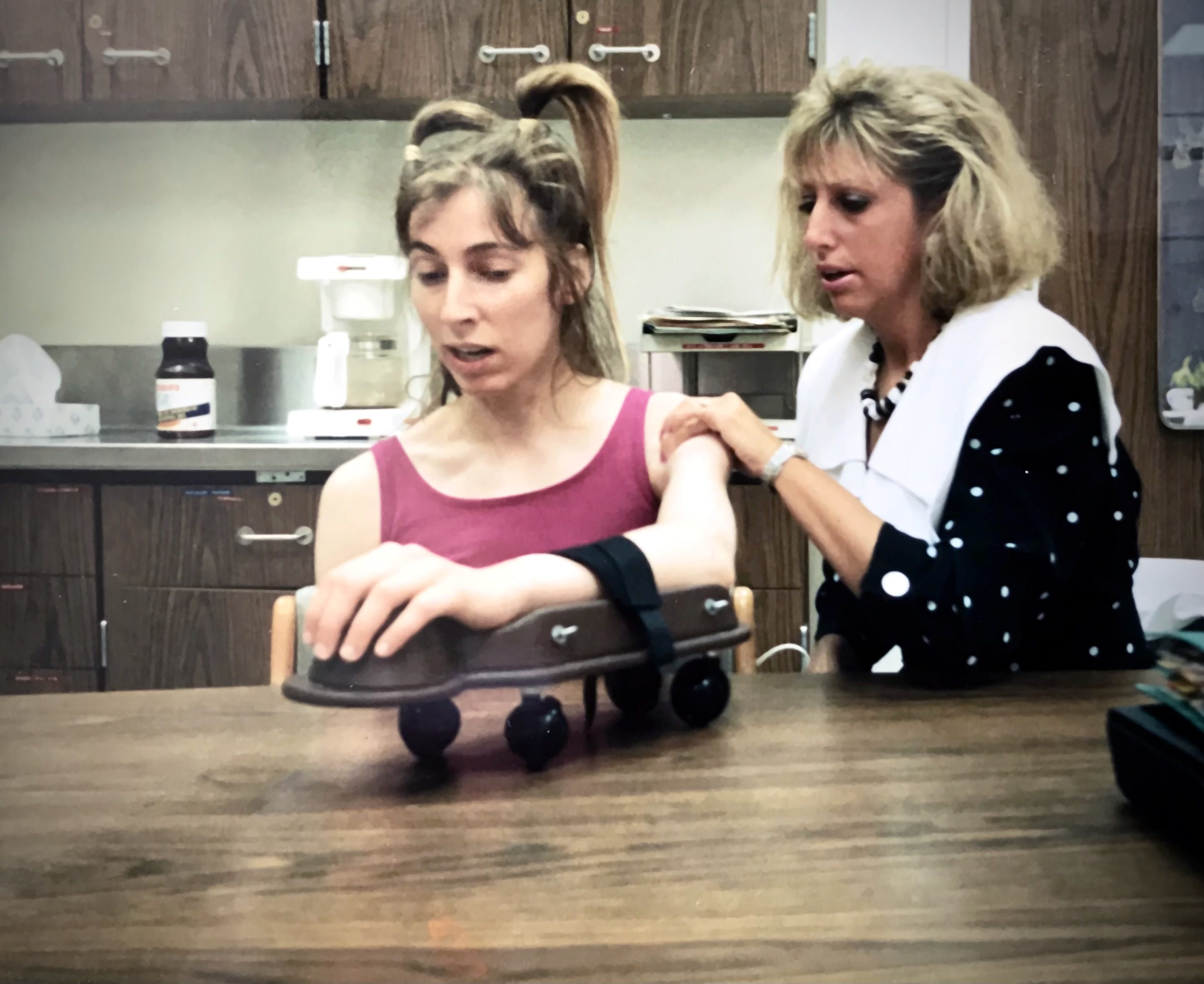
I stared at my left arm. That thin, sad appendage existed in limbo, seen but not felt. It was strapped to a contraption that resembled a narrow skateboard designed to test how much movement I could summon into the paralyzed limb.
I was being put through a series of exams to determine whether I was a good candidate for the rehabilitation program. My balance was checked, my limited mobility was measured, and I was hooked up to a machine that tested the spasticity in my left leg. Now the focus was on my arm.
“Push it away from your body toward me,” said Pam, the therapist who was in charge of the assessment. I stared harder at my arm, willing it to move. Nothing. “Okay, now try moving it in toward your body,” she said. Again, a concentrated effort. This time my arm pulled inward a bit.
“Hey,” I exclaimed. At least it’s something. Pam nodded.
“That’s right. It’s the reflex. Because of the damage to your brain, your arm and leg will naturally want to contract in toward your body.”
“So, it’s easier to move my arm in this direction?”
“Yes. It’s part of the pattern from the brain injury,” Pam explained. “The reflexes in your body want to pull in and curl up in a fetal position. We want to prevent that. Now, extend it straight out.” I tensed my muscles and felt sweat pop in my right armpit. My left arm ignored me.
A wave of exhaustion and defeat flooded my body. I looked up and someone across the room met my gaze. Then a quick, startled breath as I realized I was looking into a large mirror on the opposite wall.
I hadn’t seen myself since before the stroke. The reflection staring back at me was pale and gaunt. There were dark circles under the sunken eyes. One half of the sickly face drooped. The crooked body was twisted to one side. The right side of the scalp was shaved while the rest of the hair was pulled up into little ponytails. A row of scab-encrusted staples ran from the top of the stubbly scalp to behind the right ear.
The shock of my changed self combined with the failure to move my arm cracked my cheery mask. Tears sprang to my eyes.
“Are you all right?” Pam asked.
“I can’t do it,” I said. “It’s like mind over matter. I might as well try lifting this table with my thoughts.”
“I know it’s hard,” Pam said. “Just do your best.”
“I can’t!” I insisted. Deep frustration was stirring. Trying harder just made the nightmare more real.
“Okay,” Pam says as she patted my shoulder gently. “Take a break.”
It was my first night in the rehabilitation program. The transition from acute care to rehab was like going from the cradle to boot camp. As soon as I arrived in the unit, I was told by a stern nurse that laziness, shirking, whining, and drug dependency wouldn’t be tolerated. My sister wouldn’t be allowed to sleep in my room anymore. Em needed the break, but I’d sorely miss her comforting presence at night.
I was startled awake by a panicked voice from across the room. I’d been dreaming of walking easily and lightly down a sunny street, smiling at the length of my stride. It took me a moment to figure out where I was and who was calling out.
It was my roommate Ethel, a woman in her seventies who, like me, had suffered a stroke that wiped out her left side. She had the added burden of trying to cope with disorientation, incontinence, and insomnia.
“Hey, hey over there,” she said, desperation etched in every word. “Where are we?”
“We’re in the hospital,” I replied gently.
“The hospital? Why?” Ethel asked.
“Because we...” I began to answer.
“Oh my God! I can’t move my arm. My leg! Something’s wrong! I can’t move them! Ethel was so agitated I was afraid she’d throw herself out of bed and crash to the floor. I tried to calm her by explaining what had happened. I assured her that she didn’t have to worry. We were being well cared for. Ethel thanked me and fell silent.
I drifted back to sleep. I dreamed of dancing at a party. I was agile, acrobatic. I threw my arms around a beautiful man who lifted me effortlessly into the air…
“I can’t move my arm!” Ethel cried out, jolting me awake.
“I know. It’s all right, Ethel. We both had strokes. That’s why we’re here,” I told her again.
“I want to leave. I want to leave!” she insisted.
“You can’t get out of bed, Ethel. You have to be careful, so you don’t fall.” I gave up trying to sleep. Ethel and I talked for a while until, in the middle of a story about the Scottie dog she had as a child, Ethel began to snore softly. I closed my eyes.
Dreams again. Climbing ladders, pulling myself up on a rope, diving into a pool. Physical freedom…
“Hey, hey you! What’s going on? Something is wrong with my arm!” Ethel shouted. The cycle continued until dawn.
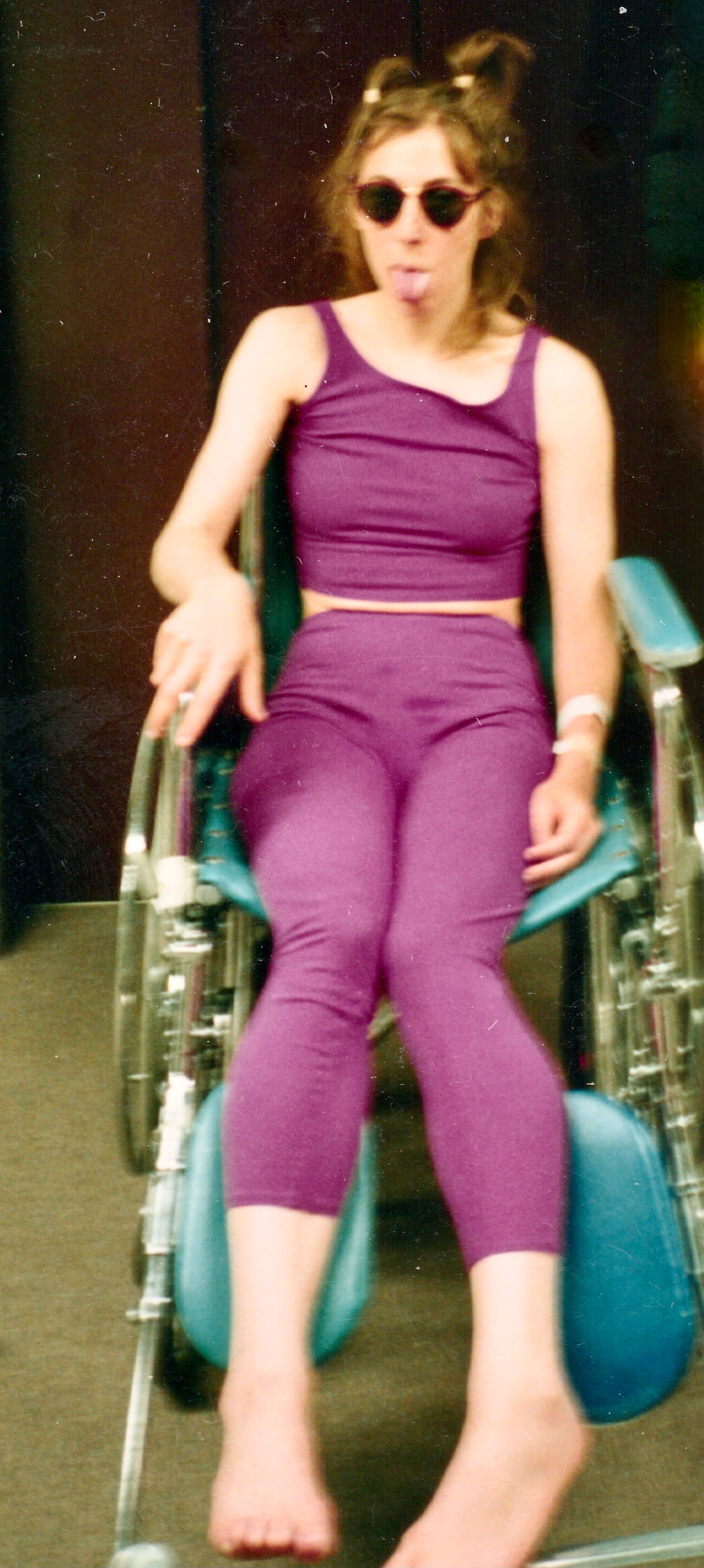
The doors to the huge therapy gym opened with a whoosh, revealing one of Dante’s stranger circles of Hell. Groans, grunts, and curses sprang from the mouths of tormented patients trying to move uncooperative limbs. Staff members hovered around them, calling out instructions and words of encouragement.
An orderly parked me by a padded table and pointed to a powerfully built woman bent over an elderly patient in a wheelchair.
“That’s Bonnie, your physical therapist,” said the orderly. “She’ll be with you as soon as she’s done with Cora.” I watched Bonnie in action. She leaned closer to the frail Cora.
“Listen, I don’t ever want to hear you say, ‘I can’t’ again!” Bonnie commanded like a drill sergeant. “Do you hear me? Now get up and do it.” Cora cowered in her wheelchair.
“But I...” she whispered.
“You can do it and you will. We are going to get you walking again. Now get up!” Cora slowly, unsteadily rose from her chair, picked up a four-point cane, and took a few shaky steps. Bonnie watched her gait.
“That’s all I can do,” Cora said.
“Two more,” Bonnie insisted. Cora pushed herself to the limit and took the steps. Bonnie’s assistant placed Cora’s wheelchair behind her and she collapsed into it.
“There! You did it.” Bonnie smiled. Cora nodded, spent. “Good work. That’s it for today.”
An orderly whisked away the drained Cora as Bonnie turned her attention to me. I wasn’t going to cross this woman.
“Hi, Elizabeth. I’m Bonnie. We’re going to get you out of that wheelchair. Are you ready to work?”
“Absolutely,” I replied. If anyone could get me walking, or hobbling, or limping, or something that resembled two-legged locomotion, it was Bonnie.
Grueling weeks passed. Bonnie and her assistant, Michelle, taught me how to sit up on my own. When they first started working with me, I had no control over the muscles on my left side, so sitting without toppling over was impossible. Every day they lead me through exercises designed to strengthen my weakened muscles. Mostly, I practiced the routine with my right side and exerted tremendous effort trying and failing to make my left side move. Bonnie and Michelle guided my non-cooperative limbs and praised the slightest twitch I was able to induce.
The payoff was minimal, but enough to get me to the next phase: standing.
Bonnie sat in front of me looking directly into my eyes. “You can do this, you know,”she said. I was doubtful. “I want you to get out of your wheelchair slowly. I’m going to hold your hips so you won’t fall.”
I took a deep breath and slowly rose out of my wheelchair using my right leg to hold all my weight. Standing was disorienting. I could feel where my right foot touched the ground, but my left foot simply wasn’t there. I looked down to see what my left leg was doing. My eyes registered that it existed, but it could have been a mirage. My right leg began to tremble from exertion. I’d only been standing for a few seconds.
“Try to shift your weight to your left side,” Bonnie said, holding my hips firmly. I was stymied. “Go on,” she coaxed. I twisted my body and watched my left leg drag forward. It was a step of sorts. “Good. Now right leg.” That was easy enough. “Left again,” came the prompt. I tried the awkward contortion once more, but my leg wouldn’t budge. Bonnie guided the leg and it jerked forward mechanically. Dead weight.
“Okay, now step with your right, then release your left hip, bring your left knee toward me, and swing your foot to step.” I tried to do what Bonnie asked, but my brain was bewildered. After three steps I ran out of energy and had to sit down in my wheelchair again.
“That was perfect,” Bonnie said. “Rest a minute and then we’ll do some exercises on the mat.”
Although I was worn out, I felt triumphant. Standing up and taking those few distorted steps felt like my life’s greatest achievement.


You are amazing! ☀️
I promise to pick up the pace reading these, I swear. 🤣
I hope you turn this into a book! You are a great writer.